



 See other releases of corporate mass media
History helps maintain a balance between the past and the future
In September and October, the USUE Museum offers tours for first-year students, covering the history and life of the university, our city, and country. Students confirm that the museum presents information in an engaging and informative manner.
Many students learn at the museum that the oldest USUE building is nearly 200 years old. The historic building at the intersection of Narodnaya Volya and 8 Marta streets, where tours take place, is where Yekaterinburg's educational system was born. In the 19th century, the building housed a theological school, and, in 1920, the A.M. Gorky Ural State University was opened. In 1967, the Faculty of Economics was transformed into the Sverdlovsk Institute of National Economy (SINH), which was renamed USUE in 1994. These facts alone can impress newcomers, but the full tour program provides much more information.
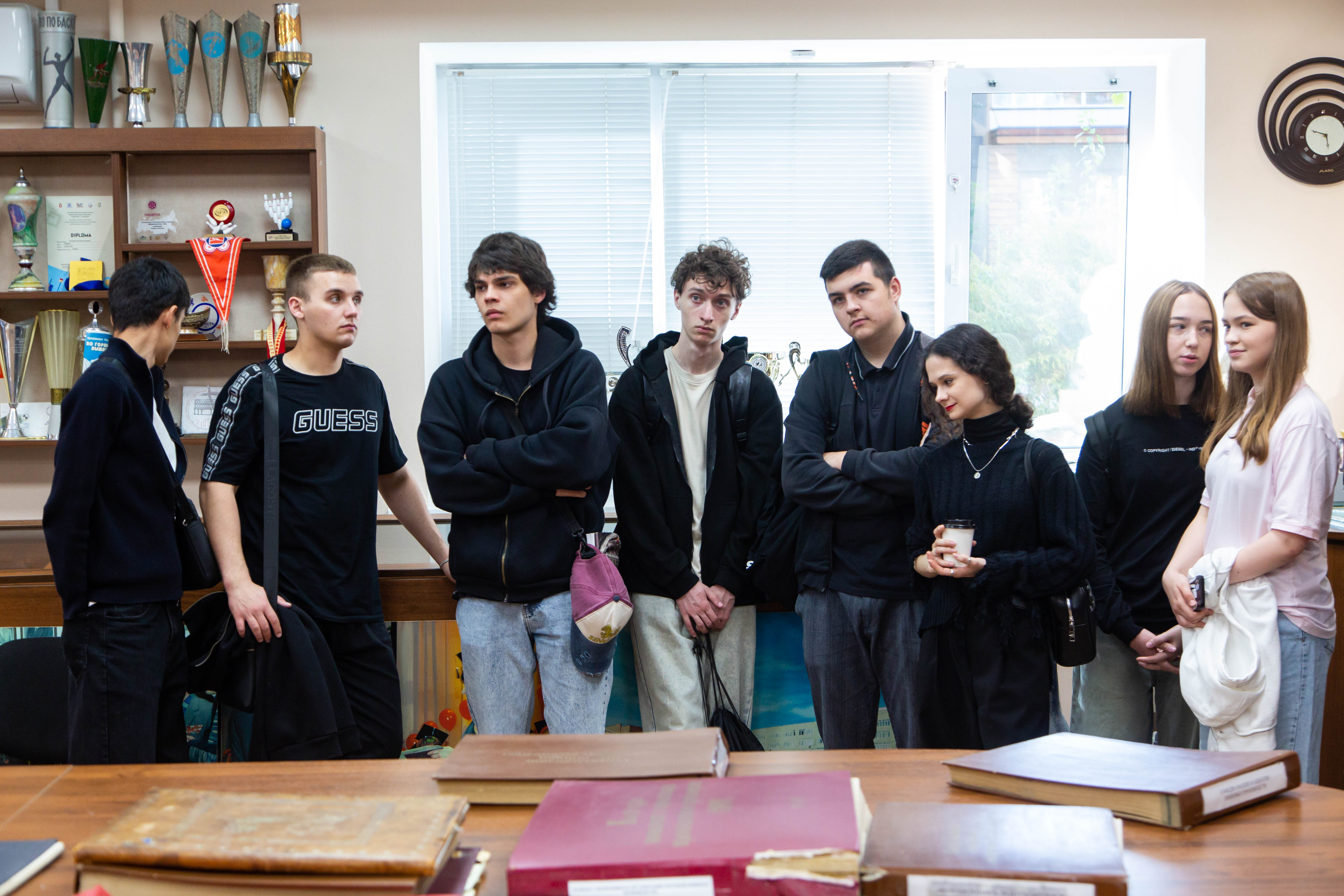
The museum displays antique exhibits—objects from everyday Russian life of the 18th and 19th centuries. Many students are also interested in the technological advances of the 20th century, such as cameras, record players, and radios. The turn of the 20th and 21st centuries is also represented, with the first mobile phones and voice recorders. There are functioning exhibits, and you can watch a movie, listen to music or a radio program. You can also realize that today many of these items have been replaced with a single pocket device—a mobile phone. However, the guides point out that such convenience brings a risk of making modern people completely dependent on technology. Certainly, there is a lot to be thought over.
The exhibition on the history of the EEYF featuring all 15 forums held at the university, also sparks the interest of newcomers. The extensive growth of this annual international youth event is evident: from the initial 300 participants to an audience of over 22,000 at the 2025 EEYF.
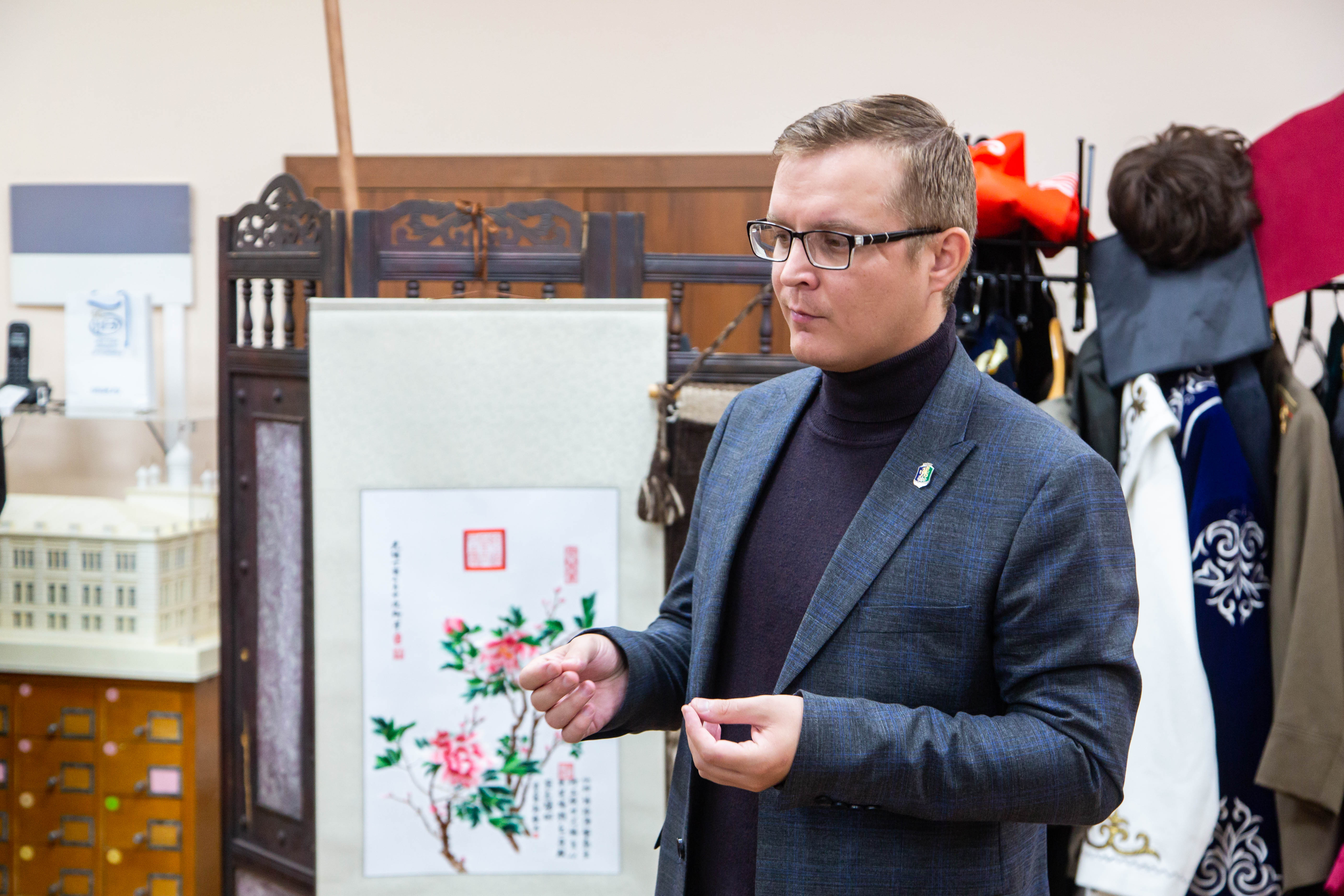
“Besides, we tell first-year students about youth organizations, associations, and studios running at USUE (volunteer service organizations, sports clubs, and creative activities) and about events. We're pleased to see the students' interest who actively join in the university's life,” says Nikita Kosarev, director of the USUE History Museum.
He himself is an extraordinary individual with a proactive approach to life. Yulia Taushkanova, head of the USUE library reading room, introduces the museum director to tour participants. Nikita Kosarev leads a volunteer group collecting humanitarian aid for SMO participants. Volunteers often carry numerous loads on their shoulders. And Kosarev's volunteer work isn't limited to Yekaterinburg. He goes to the front line; he served as a medical aidman assisting wounded soldiers. He also taught evacuated children there. He participated in a search team recovering the remains of soldiers from battlefields of the Great Patriotic War. He is the leader of the USUE “Honor and Memory” search team.
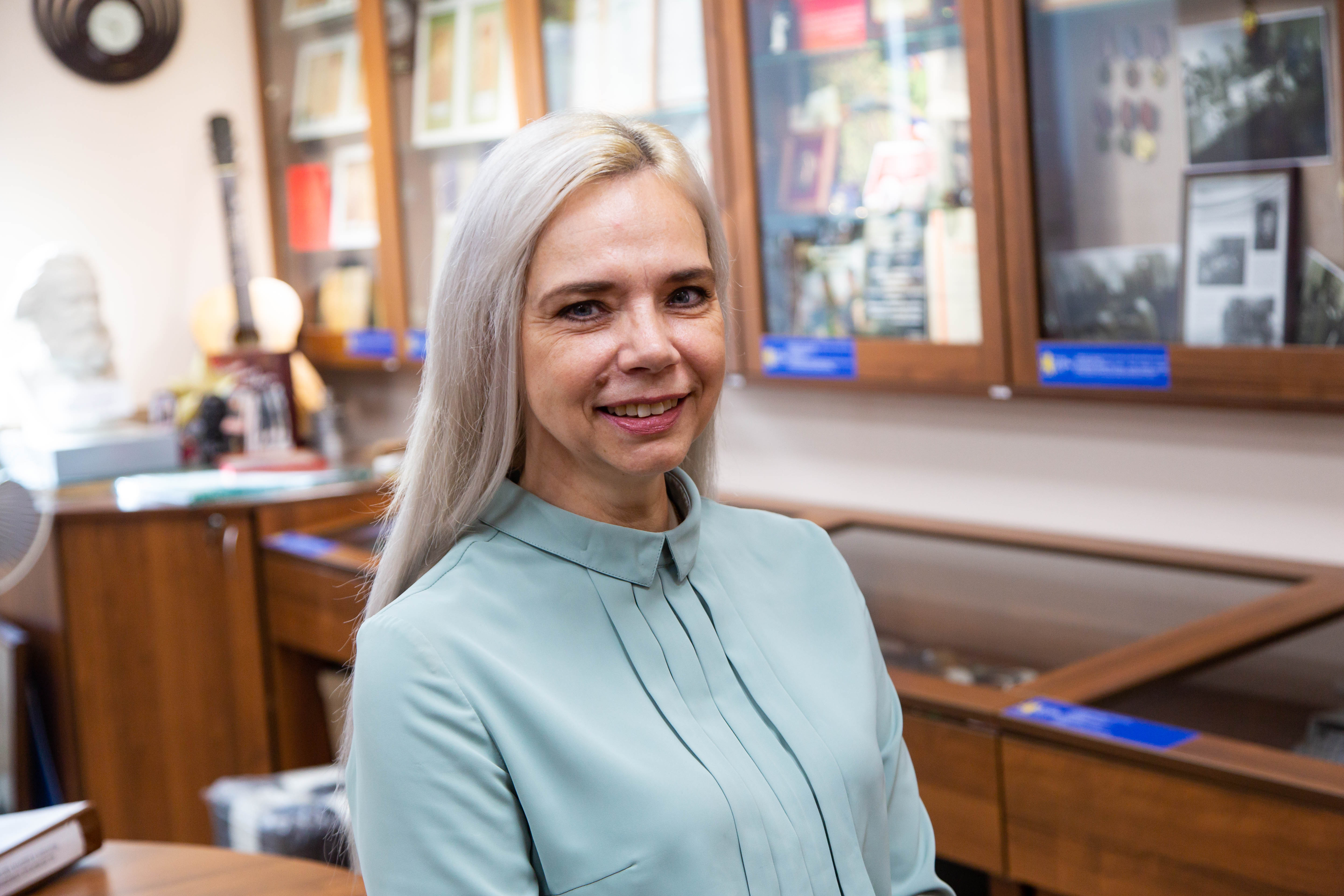
“We encourage students to join volunteer and search teams. Knowing that thanks to your participation, a previously missing soldier has symbolically 'returned' home, even after 80 years, is both exciting and truly rewarding. Search teams are participating in a great and noble cause, giving descendants the opportunity to truly touch the memory of their hero, cherish it with their entire family, and pass it on from generation to generation,” Yulia Taushkanova explains.
Museum excursions for first-year students complement another project developed last year in the USUE library's reading room— “Learning Russian History.” Initially, classes for this project were held in the reading room during long breaks. Later, the project became a joint program with the USUE College. These interactive, creative history lessons include a museum visit, watching documentaries, and logic quizzes and tests. The lessons are included in the College's curriculum for students majoring in Commerce, both for 9th and 11th graders.
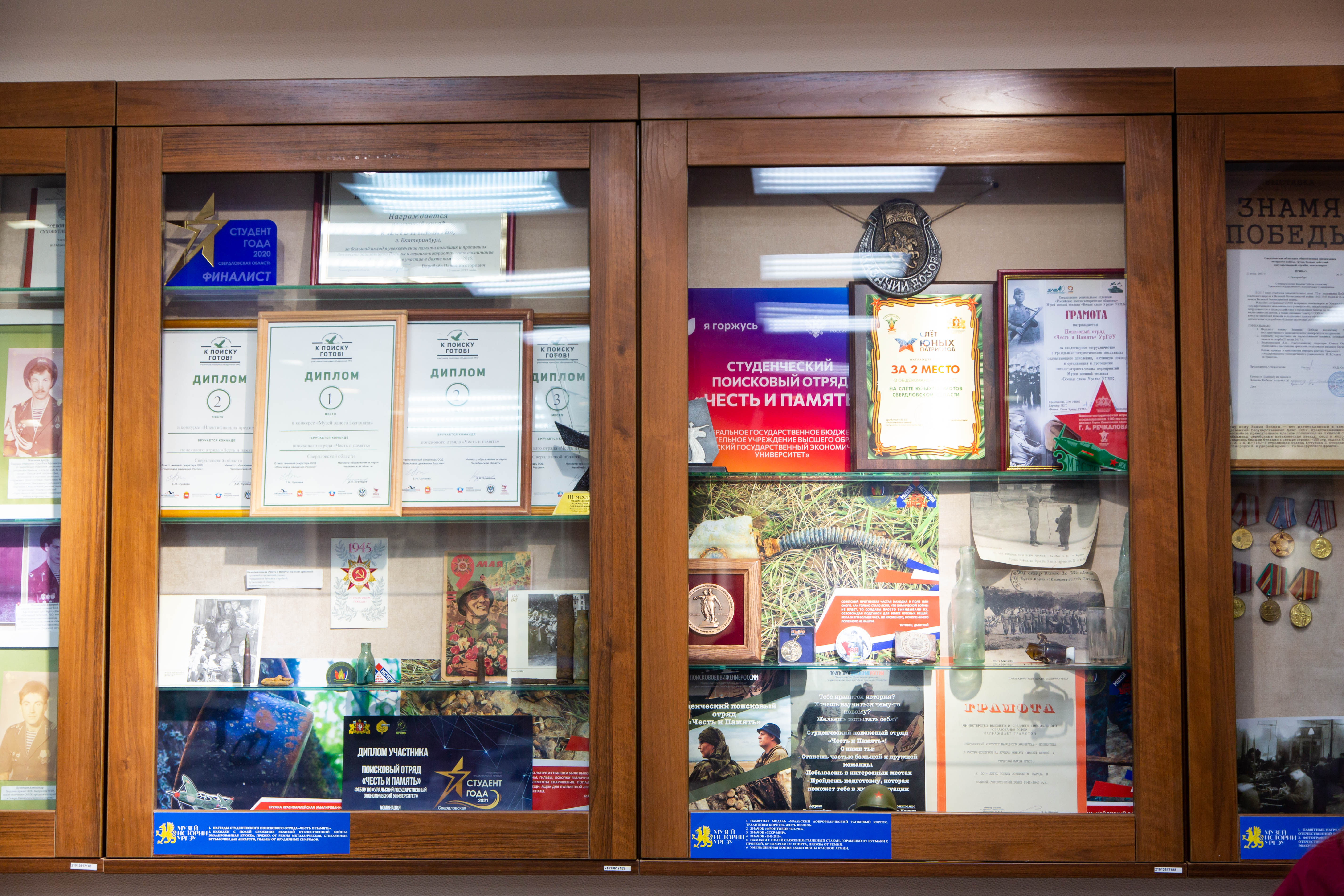
“History is an optional subject. And anyone who makes this choice consciously follows the right path. Understanding modern Russia, its politics, culture, and place in the world means being a sober-minded person. History is the key to unlocking the code of our national identity. It answers the questions 'Who are we?', 'Where do we come from?' and 'Why are we like that?' Without this fundamental knowledge, it's impossible to be a conscious citizen, “ Yulia Taushkanova concludes.
Participants of the latest excursion, students from group 25-02 TD1 of the USUE College, agree with this. We asked them to answer the question “Why is it necessary to study history and go to a museum?”
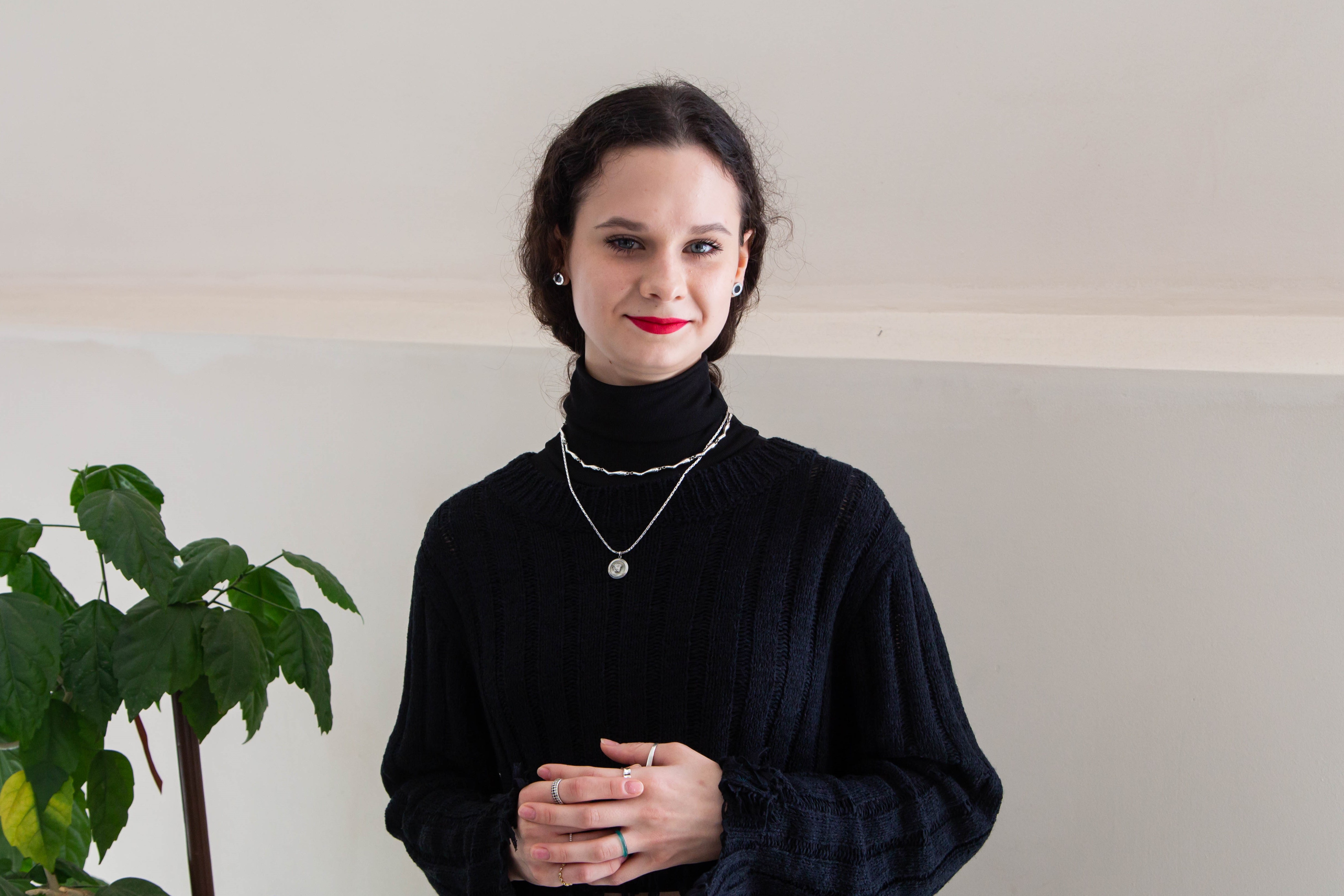
Daria Maiborodova: “Many thanks to the tour guides! They try to enlighten us, introduce us to the cultural and historical world of the university, and broaden our horizons. If people don't study and understand their history, they risk repeating their own or others' mistakes.”
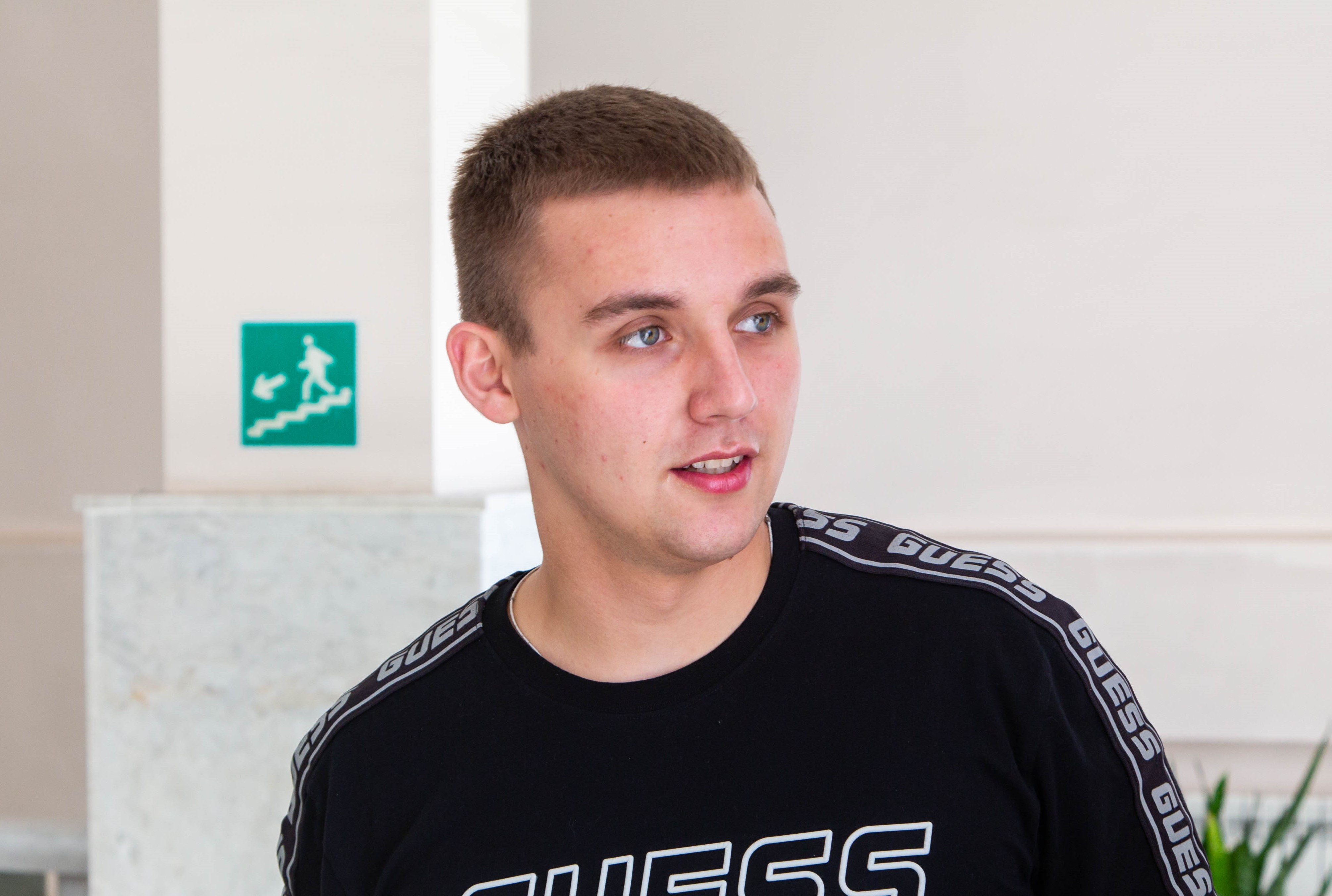
Alexander Duvalov: “Studying and understanding the history of your university, city, and country is, I believe, an essential part of every student's life. I enjoyed the tour. I was also impressed by Nikita Sergeevich Kosarev's contribution to the volunteer movement and his engaging presentation. Thanks to the organizers. Tours like these are currently important.”
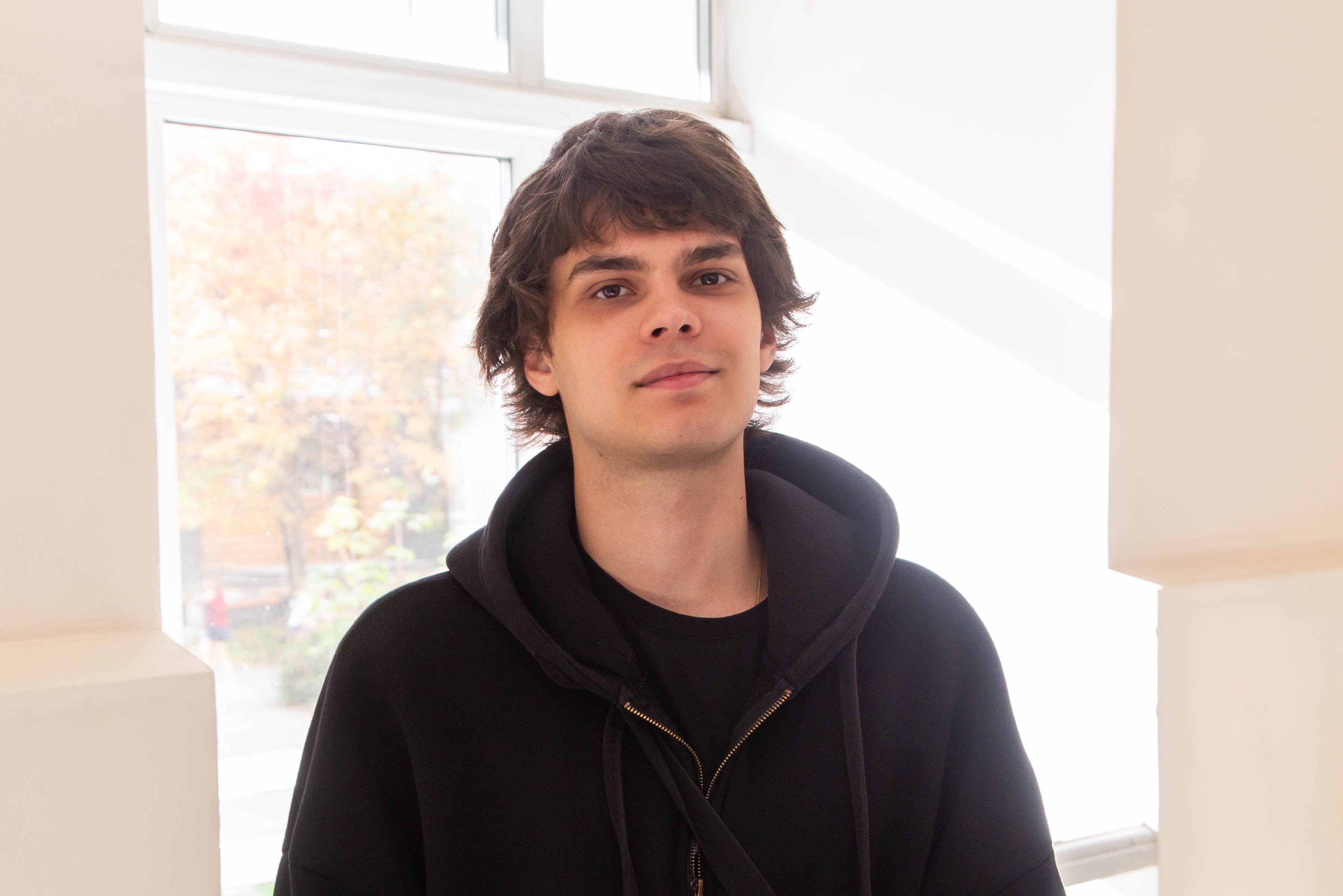
Nikita Fominykh: “It's important for everyone to know the history of not only the place where they study, but also the country and the world. This helps them learn from the past while planning for the future. History is the foundation on which society rests. We stand stronger on this foundation if we know the course of past events. And we will be able to pass on historical values and knowledge to future generations—to our future children and grandchildren.”
The material was prepared by Elena Berseneva, a journalist for the USUE Information and Advertising Office and editor of the corporate newspaper Economist


