



 See other releases of corporate mass media
How is higher education changing?
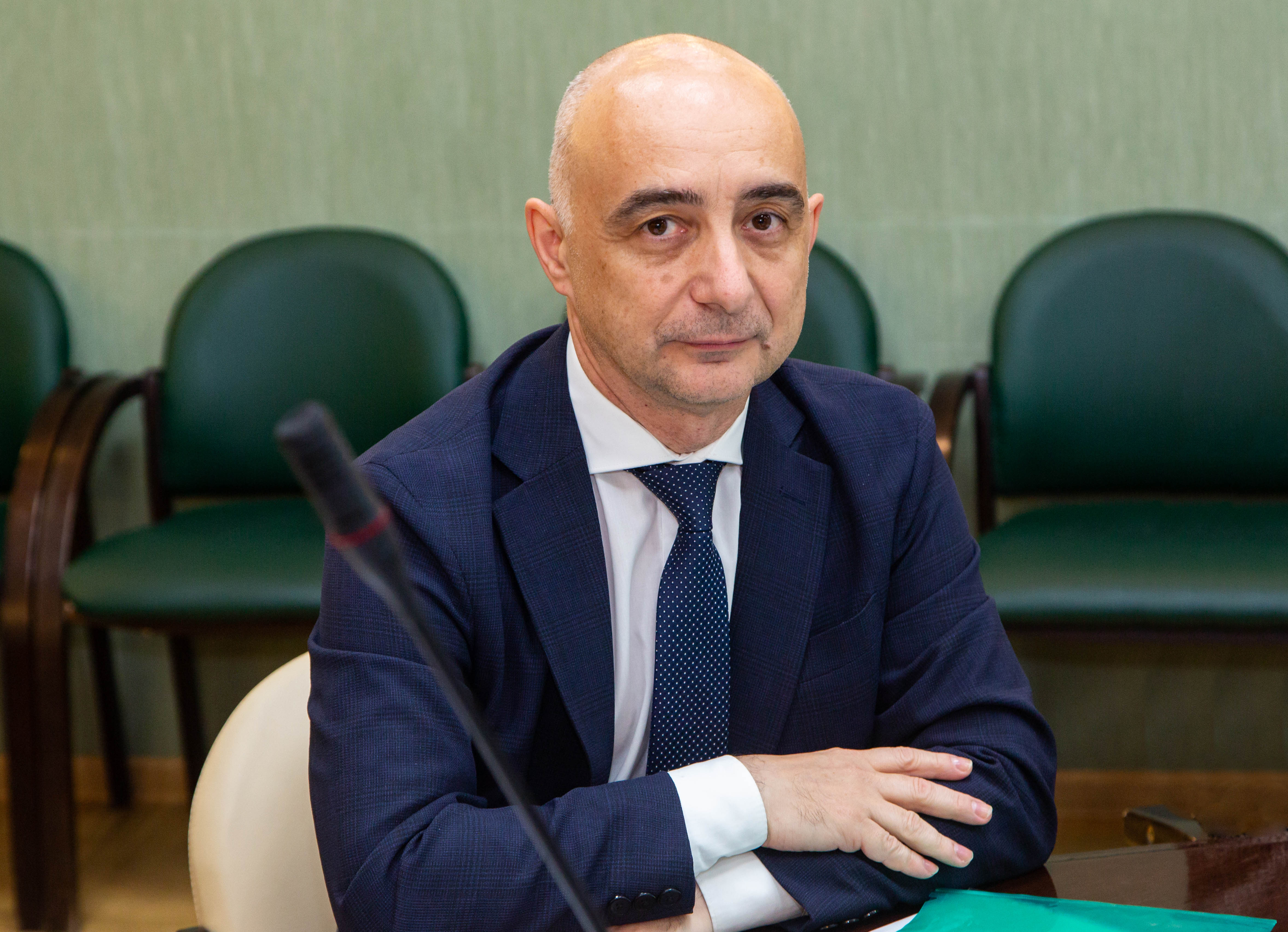
June 17, the Minister of Science and Higher Education of the Russian Federation, Valery Falkov, met in Yekaterinburg with the heads of universities of the Ural Federal District. The meeting was attended by the rector of Ural State University of Economics, Yakov Silin, and vice-rector for academic affairs, teaching methods and quality of training, Dmitry Karkh. The USUE vice-rector for academic affairs, teaching methods and quality of training, Dmitry Karkh, spoke about some aspects of the activities of higher education institutions that had been discussed at the meeting.
- Dmitry Andreevich, which of the issues raised at the meeting was the most important for you?
- Recruitment for major specialties. The Minister noted that universities should train experts in their subject-oriented specialty, that is, for example, medical universities should train doctors, pedagogical universities should train teachers, and economic universities should train economic specialists. According to the Ministry of Education, university graduates who mastered not core university programs are not the most highly-demanded specialists in the labor market. Let’s start with the average admission score. At universities that today train economists, but do not specialize in economics, the threshold level is no higher than 52. If converted into school grades, it means they admit C-students. And USUE admits high-school graduates with a Unified State Exam score higher than 66.
Since the times of the USSR, USUE has been training specialists for the national economy, and this includes trade, banking, public catering, and many other areas. IT is also our specialization, because digitalization concerns all sectors of the economy. And the fact that the Ministry of Education of Russia allocates state-funded places to USUE for IT programs is recognition of the quality of education offered at our university.
- The meeting also discussed upbringing. Do you agree that upbringing is one of the functions of a university?
- Absolutely. And the USUE rector Yakov Petrovich Silin pays great attention to this work. If we talk about assistance to SVO participants, in some matters, we do more than other universities in the country. This concerns free use of the university sports complex, and free dormitory, legal aid and psychological counselling, and transfer to state-funded places.
If we talk about the patriotic education and family values, this is also part of the work of a higher educational institution. Because bachelor’s degree students are already adults and fully formed individuals, influencing them is very difficult, yet personal examples, conversations, and university events can effect change. You see, higher education cannot be separated from the processes taking place in society, because a university is the last step before entering an independent life, and the civic position of each individual determines what society will be like and how we will live. USUE does everything to ensure that the university produces highly qualified specialists with an active life position, who are able to make decisions and sort the wheat from the chaff.
- What will happen to higher education? We are abandoning the Bologna process, and an experiment to develop a new system has been underway since 2023. Is there an understanding of what we are moving towards and striving for?
- Not a single Ural university is participating in the experiment. I can say for sure that it will be completed in 2026. It is assumed that there will be basic education, designed for 4-6 years depending on the field of training, and specialized education, with in-depth study of a specialty.
We are moving to a system that is understandable to us, which was in effect in Soviet times. I remember my experience when the country joined the Bologna process, I worked as a dean. Then the basic subjects in all universities were the same, even the number of hours allocated for lectures. And a student could safely transfer to the 3rd year of another university and study what his heart desires. Leaving the Bologna system will definitely increase student mobility and provide greater opportunities for changing the educational trajectory, so I think the changes awaiting higher education are correct. However, I repeat that the experiment is not over yet, and changes may be made, which will not be long in coming, about a year.
Those who are now thinking about getting a higher education should not postpone submitting documents. Again, from my own experience: were those who graduated from a university before 2007, when the bachelor’s and master’s degrees were introduced into the higher education system of the Russian Federation, unemployed? did not achieve success? Yes, the system may be different, but the quality of education should always remain at a high level.


