




 See other releases of corporate mass media
Special sweets from USUE for northerners
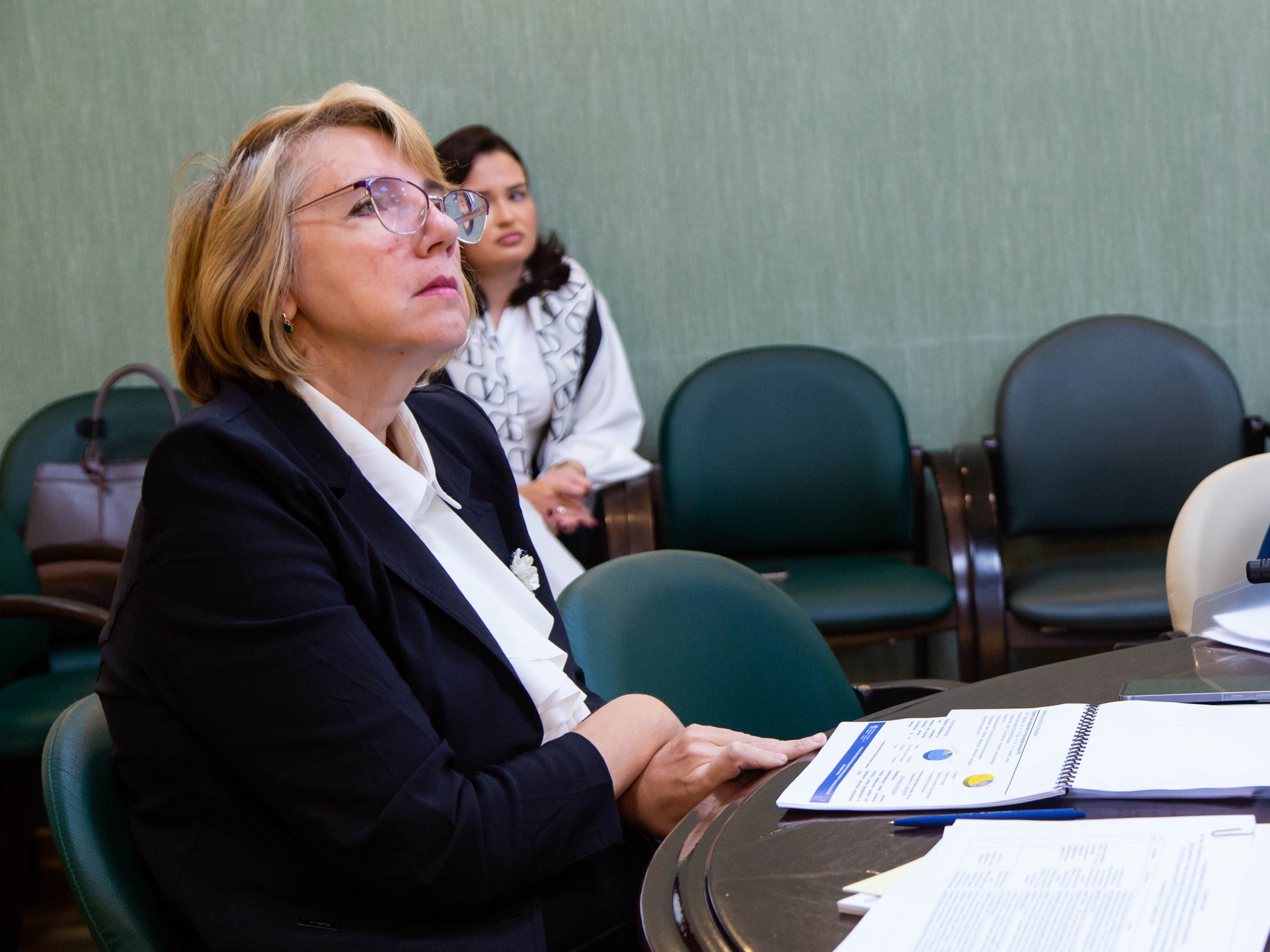
At the USUE Dissertation Council for Technical Sciences, there passed a defense of a thesis for the Candidate of Sciences degree on the subject of “Formation of consumer properties and development of technology for chocolate products for the population of the Arctic zone of the Russian Federation.”
Shamil Shamilov, a third-year postgraduate student of the USUE Department of Food Technology, presented his research to the commission and also conducted a product tasting for the Association of Indigenous Peoples of the North “Cedar. "

The scientist’s supervisor, Doctor of Technical Sciences, Professor Natalia Zavorokhina, spoke about special candies for northerners.
“The idea behind the study was that chocolate is loved by all categories of people, it can be easily enriched, and a vast range of products can be made of it,” the supervisor commented on the choice of the topic.
For scientific purposes, Shamil Shamilov studied the sensory sensitivity of the population of the Arctic and Far North.
“We were interested in how cold weather and these particular living conditions affect people. Shamil identified patterns and used them in product development,” Natalia Zavorokhina said. “Having studied all the factors that affect the population (extremely low temperatures, lack of sunlight, poor nutrition, difficult working conditions, and others), the scientists proposed several gradations of chocolate products, each of which—chocolate and candies—addresses a specific ‘problem.’ Thus, we created a healthy filling in a chocolate coating.”
“The fact is that northern berries have a shorter growing season, so berries like lingonberries, crowberries, arctic raspberries, and cloudberries contain three and sometimes five times more nutrients than similar berries grown, for example, in Altai,” the expert explained.
The dissertation author also developed a blend of vegetable oils, including camelina, amaranth, flaxseed, sea buckthorn, and milk thistle oils, to enrich the candies with unsaturated fatty acids, which has a positive effect, above all, on the body’s adaptation to climate conditions. There are truffle-shaped candies, with added cloudberries, with marmalade made from Arctic berries puree, and another type—a candy with a cheese coating, which contains increased amounts of tryptophan, an acid that promotes calm and psychological relief.
“The chocolate we developed contains capsaicin, which is found in all hot peppers—chili, jalapeño, and others. This is a substance that signals the brain to start thermogenesis, which means a person feels warmer from inside,” the professor added. “This dark chocolate is called ‘Warming.’”
Other products also have their own thematic names: “Taste of Tundra,” “Polar Summer,” “Sunny North,” “Arctic Ice,” and “Northern Calm.” And a box of candies and chocolates is called “Arctic Lights.”
The chocolate product proposed by the scientists is more than just a theoretical development. In Tyumen, where the candidate works as a chocolatier, a local craft factory has launched its production. Daily, the factory produces around three thousand pieces of candy and chocolate.
However, the price of these unique sweets is also quite “exquisite”: with the northern allowance, the cost per kilogram of these candies ranges from 547 to 900 rubles. Each candy weighs 10-12 grams.
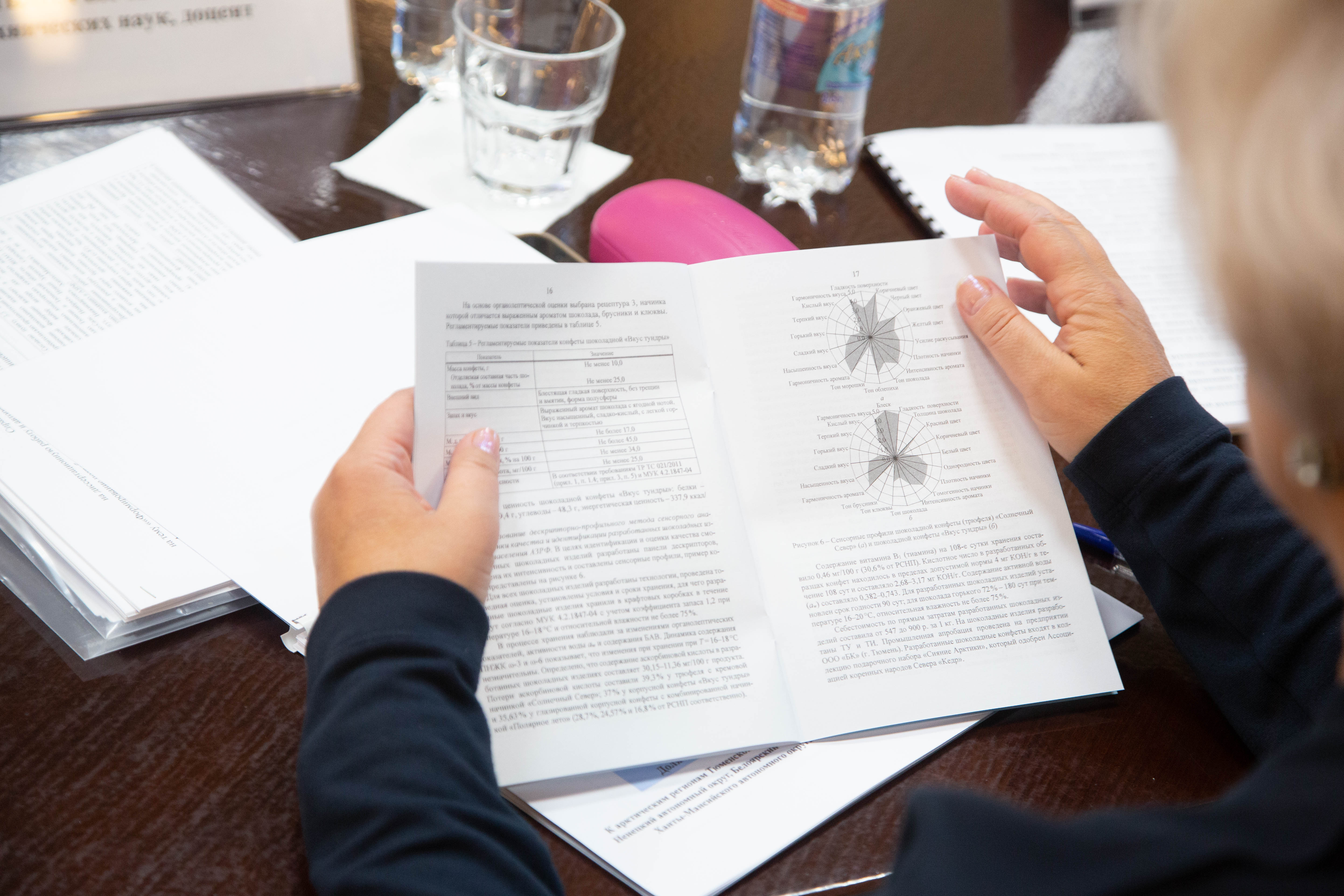
“They have a ‘functional effect,’ meaning a person can’t eat, for example, 15 candies,” explained Natalia Zavorokhina. “WHO recommends 30-50 grams of chocolate per day, or roughly 3-4 candies per day.”
Answering a question about mass production, the scientist explained that technology does not yet allow for the mass production of such candies.
“Here, we use 25% chocolate and an additive inside, whereas in mass production, it’s usually the other way around: first the shell, then it’s coated with chocolate glaze,” the supervisor shared the chocolatier’s secrets.
Besides, Shamil Shamilov developed a technology for making berry puree, which, along with the pulp, involves grinding the seeds, which also contain useful substances, to a few microns. The puree is then simply frozen and used as needed.
The young scientist completed his bachelor’s degree in Tyumen, his master’s degree with honors in St. Petersburg (where he developed chocolate with chaga), and entered postgraduate school at USUE.


